
Craving a delicious Asian-inspired dinner without ordering takeout? This Savory Beef Lo Mein with Broccoli brings tender strips of beef, crisp-tender broccoli, sweet onion, and chewy noodles together in a rich, glossy sauce. Made with soy sauce, oyster sauce, hoisin sauce, garlic, and a touch of brown sugar, this easy stir-fry delivers the perfect balance of savory, sweet, and tangy flavors in every bite.
Ready in approximately 30 minutes, this homemade beef lo mein is ideal for busy weeknights when you want a satisfying meal without complicated preparation. The beef cooks quickly in a hot skillet, the vegetables retain a little crunch, and the noodles soak up the flavorful sauce beautifully.
Whether you use traditional lo mein noodles or spaghetti from your pantry, this beef and broccoli noodle recipe is easy to prepare, simple to customize, and delicious enough to become a regular part of your dinner rotation.
Table of Contents
Table of Contents
Why You’ll Love This Savory Beef Lo Mein with Broccoli
This homemade noodle dish combines the convenience of a quick stir-fry with the comforting flavors of a classic takeout-inspired dinner.
- Quick and convenient: Prepare a complete meal in around 30 minutes.
- Tender, flavorful beef: Thinly sliced sirloin or flank steak cooks quickly and pairs perfectly with the savory sauce.
- Colorful vegetables: Broccoli and onion add texture, freshness, and natural sweetness.
- Rich, balanced sauce: Soy sauce, oyster sauce, hoisin, brown sugar, and rice vinegar create layers of flavor.
- Flexible ingredients: Traditional lo mein noodles work wonderfully, but spaghetti is a practical alternative.
- Easy to customize: Add mushrooms, bell peppers, carrots, or extra garlic to suit your preferences.
- Great for meal prep: Leftovers reheat well when stored and warmed correctly.
Choose Your Ingredients
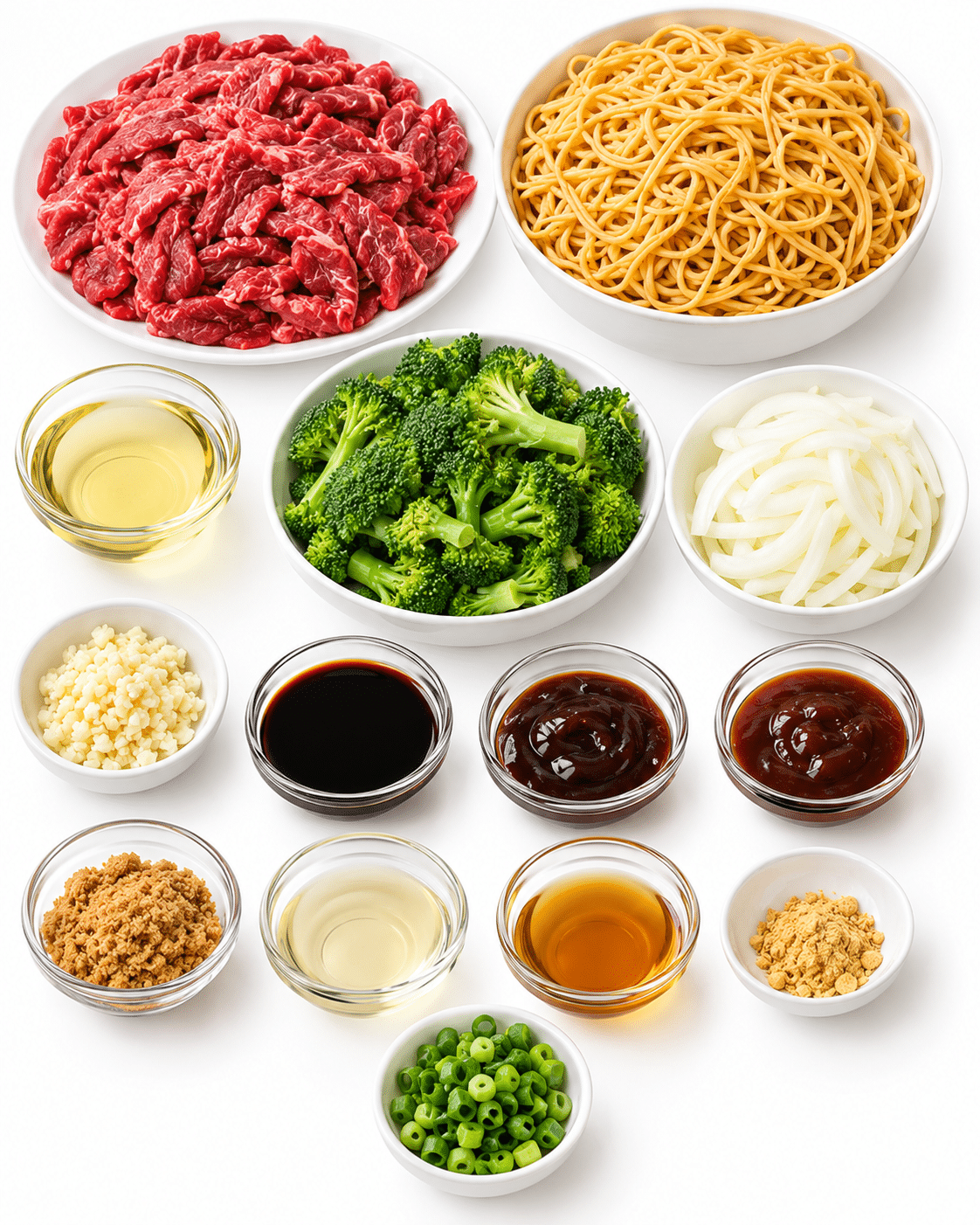
The secret to flavorful beef lo mein is using ingredients that complement each other and preparing them properly before the stir-frying begins.
Beef sirloin or flank steak: Both cuts work well for quick stir-frying. Sirloin offers a tender, beefy bite, while flank steak has a robust flavor and a satisfying texture when sliced thinly against the grain. Choose a piece with minimal tough connective tissue and cut it into thin, even strips.
Lo mein noodles: Traditional lo mein noodles provide a chewy texture that holds the sauce beautifully. If they’re unavailable, spaghetti makes a convenient substitute. Cook either option just until al dente so the noodles remain firm when tossed in the hot skillet.
Broccoli: Fresh broccoli florets provide color and a pleasant crunch. Cut them into relatively small, evenly sized pieces so they cook quickly. If the florets are particularly thick, blanch them briefly before stir-frying.
Onion and garlic: Thinly sliced onion becomes tender and slightly sweet, balancing the savory sauce. Fresh minced garlic adds a fragrant aroma that gives the finished dish extra depth.
Soy sauce: Soy sauce supplies the salty, umami foundation of the sauce. Regular soy sauce works well, but low-sodium soy sauce is a useful option if you want greater control over the saltiness.
Oyster sauce: This thick, savory condiment adds depth and richness. It is a key ingredient in creating the characteristic flavor of takeout-style beef noodles.
Hoisin sauce: Hoisin contributes a sweet, savory flavor with a slightly spiced character. Combined with oyster sauce and soy sauce, it creates a more complex coating for the noodles.
Brown sugar and rice vinegar: Brown sugar balances the saltiness of the sauces, while rice vinegar adds a gentle tang that keeps the dish from tasting too heavy.
Sesame oil: A small amount provides a distinctive nutty aroma. Because its flavor is concentrated, a teaspoon is enough to make a noticeable difference.
Ground ginger and green onions: Ground ginger is optional but adds warmth to the sauce. Fresh green onions provide a crisp, fresh finish when sprinkled over the completed dish.
Ingredients You’ll Need
For the Beef and Noodles
- 1 pound (450 g) beef sirloin or flank steak, thinly sliced
- 8 ounces lo mein noodles, or spaghetti as an alternative
- 2 tablespoons vegetable oil
- 1 cup broccoli florets
- 1 onion, thinly sliced
- 2 garlic cloves, minced
For the Lo Mein Sauce
- 2 tablespoons soy sauce
- 2 tablespoons oyster sauce
- 1 tablespoon hoisin sauce
- 1 tablespoon brown sugar
- 1 tablespoon rice vinegar
- 1 teaspoon sesame oil
- ½ teaspoon ground ginger, optional
For Garnishing
- 2 tablespoons chopped green onions
How to Make Savory Beef Lo Mein with Broccoli
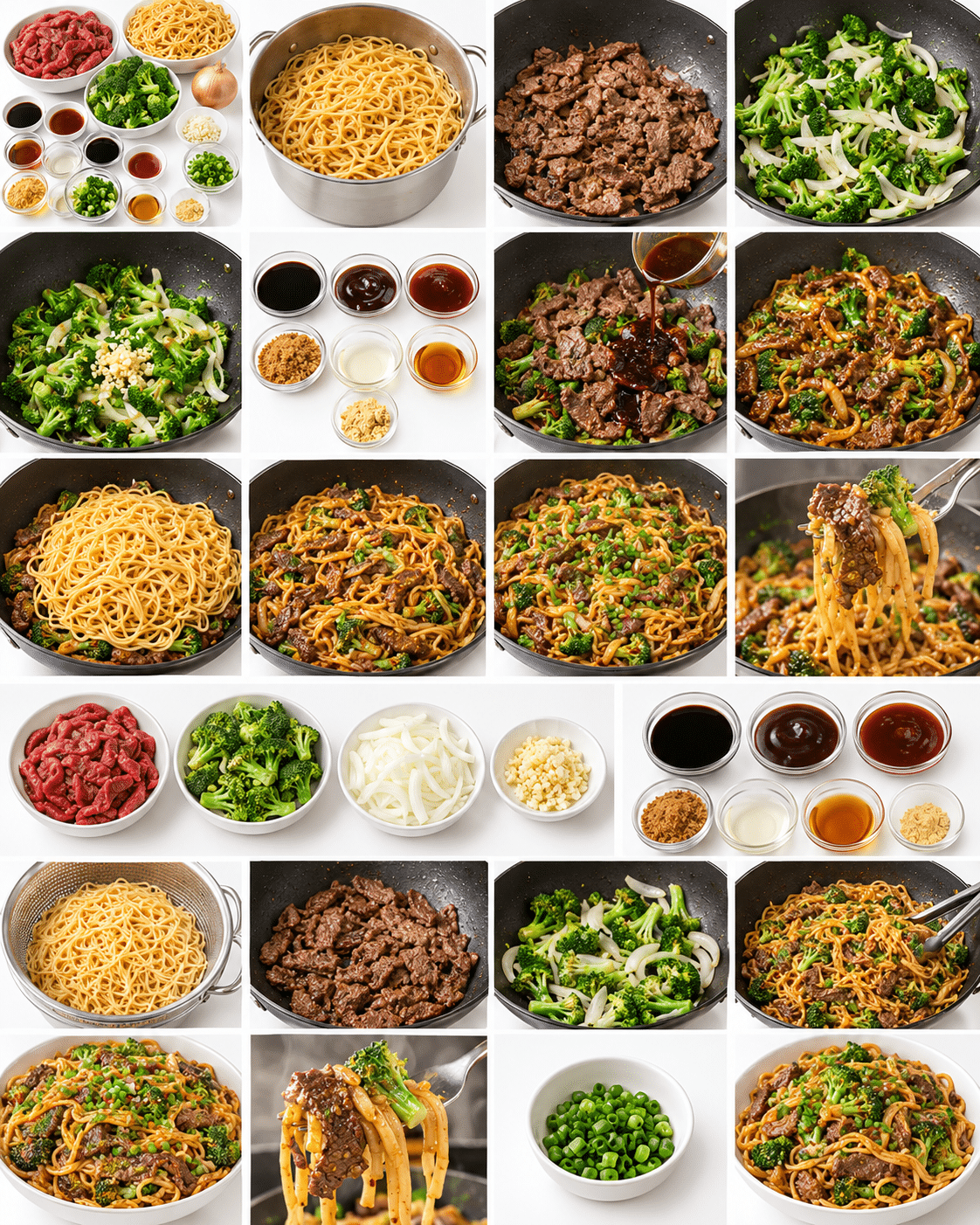
Step 1: Prepare the Noodles
Bring a large pot of water to a boil and cook the lo mein noodles according to the package directions. If using spaghetti, cook until just al dente.
Drain the noodles thoroughly and set them aside. If they need to sit for a few minutes, toss them with a small amount of oil to help prevent sticking.
Avoid overcooking the noodles because they will be tossed in the skillet again before serving.
Step 2: Slice and Cook the Beef
Slice the sirloin or flank steak into thin strips against the grain. Cutting across the muscle fibers helps make each bite more tender.
Heat the vegetable oil in a large skillet or wok over medium-high heat. When the oil is hot, add the beef in a single layer. If the skillet is crowded, cook the meat in batches to prevent it from steaming instead of browning.
Stir-fry for approximately 3–5 minutes, depending on the thickness of the strips, until browned and cooked to your preference. Transfer the beef to a plate.
The original cooking estimate of 5–7 minutes may be appropriate for thicker pieces, but thin strips can cook much faster. Use a food thermometer when needed to verify safe doneness.
Step 3: Stir-Fry the Broccoli and Onion
Using the same skillet, add the broccoli florets and sliced onion. Cook for 3–4 minutes, stirring frequently.
The onion should begin to soften, while the broccoli should become bright green and tender-crisp. If the pan becomes too dry or the broccoli needs more time, add a small splash of water and let it steam briefly.
Avoid cooking the vegetables until completely soft. A little remaining crunch gives the finished lo mein a better texture.
Step 4: Add the Garlic
Stir the minced garlic into the vegetables and cook for about 30–60 seconds, stirring constantly.
Garlic cooks quickly, so watch carefully to prevent it from burning. Once fragrant, move on to the next step.
Step 5: Mix the Savory Lo Mein Sauce
In a small bowl, whisk together the soy sauce, oyster sauce, hoisin sauce, brown sugar, rice vinegar, sesame oil, and optional ground ginger.
Continue whisking until the brown sugar is mostly dissolved and the ingredients are evenly combined.
Taste a small amount of the sauce before adding it to the skillet. If you prefer a less sweet dish, reduce the brown sugar slightly. If you enjoy a brighter flavor, add a little extra rice vinegar.
Step 6: Return the Beef and Add the Sauce
Return the cooked beef to the skillet with the broccoli and onion.
Pour the sauce over the ingredients and toss well. Let everything cook together for 2–3 minutes, stirring frequently so the beef and vegetables become evenly coated.
The sauce should begin to warm and cling to the ingredients. If it thickens too quickly, add one or two tablespoons of water to loosen it.
Step 7: Toss in the Noodles
Add the cooked noodles to the skillet. Using tongs, gently toss them with the beef, broccoli, onion, and sauce until everything is evenly combined.
Cook for another 1–2 minutes, just long enough for the noodles to warm through and absorb some of the sauce.
If the noodles appear dry, add a small splash of warm water and toss again. Avoid adding too much liquid at once, as the goal is a glossy coating rather than a watery sauce.
Step 8: Garnish and Serve
Remove the skillet from the heat and sprinkle the chopped green onions over the top.
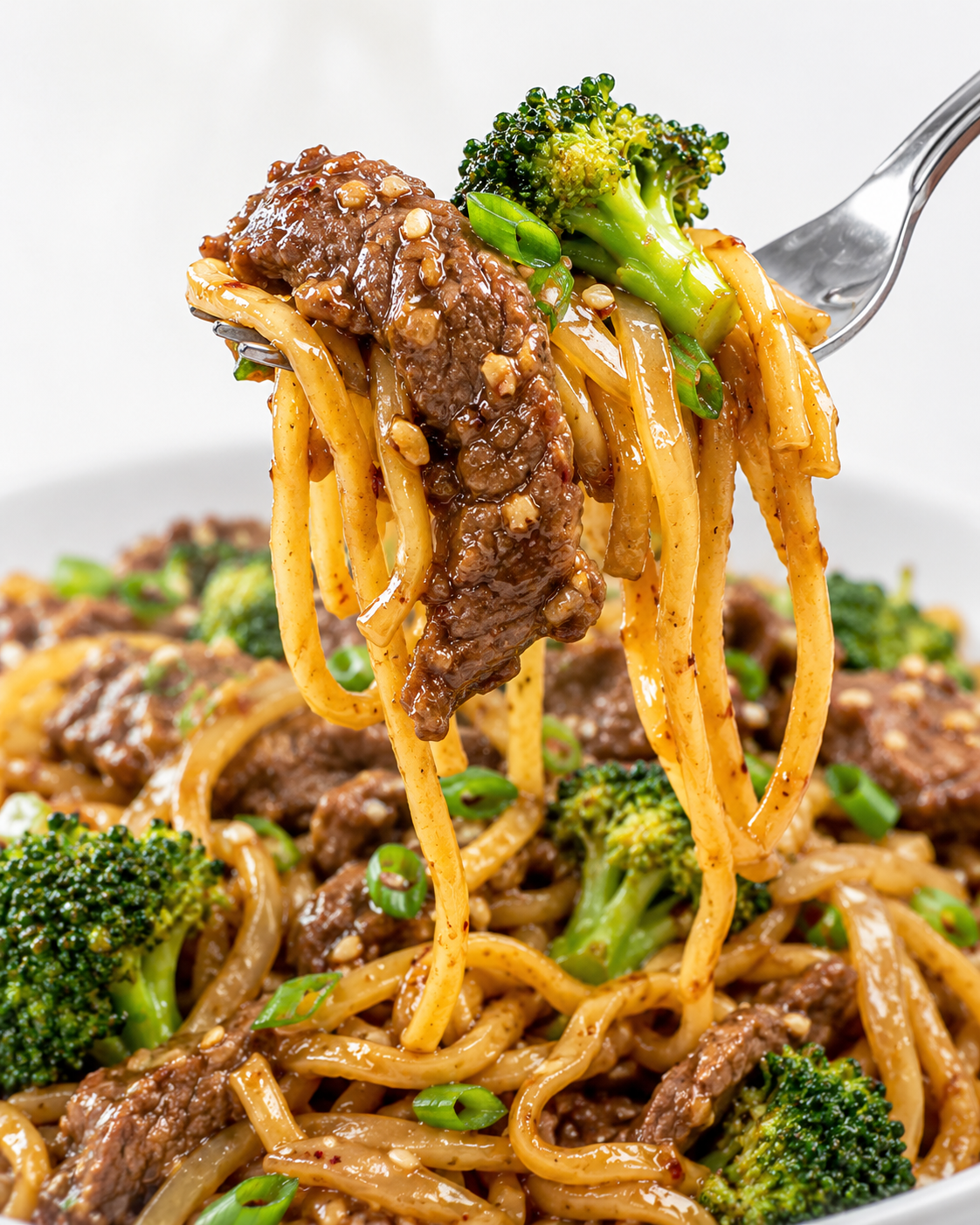
Serve the beef lo mein immediately while the noodles are warm, the beef is tender, and the broccoli still has a little bite. For an attractive presentation, arrange the noodles in bowls and distribute the beef and vegetables evenly across each serving.
Tips for the Best Beef Lo Mein
Slice the beef against the grain. Look for the direction in which the muscle fibers run and cut across them rather than parallel to them. This helps make the beef easier to chew.
Prepare everything before cooking. Stir-frying moves quickly. Slice the beef, chop the vegetables, cook the noodles, and mix the sauce before heating the skillet.
Use a hot pan. A properly heated skillet helps the beef brown quickly and gives the dish a more developed flavor. If necessary, cook the meat in batches.
Don’t overcrowd the skillet. Too many ingredients at once can lower the pan temperature and cause the beef and vegetables to release excess moisture. A wide skillet or wok is ideal.
Keep the broccoli slightly crisp. Tender-crisp broccoli adds a welcome contrast to the soft noodles. Small florets cook faster and more evenly.
Cook the noodles just until al dente. Overcooked noodles can become mushy when tossed with the hot sauce. Check the package instructions and taste a strand before draining.
Mix the sauce in advance. Combining the sauce ingredients in a bowl ensures the brown sugar dissolves evenly and prevents you from having to measure ingredients while the food is cooking.
Adjust the sauce carefully. Soy sauce and oyster sauce are both salty, while hoisin and brown sugar add sweetness. Taste before adding extra seasoning.
How to Make It Even Better
For an even more flavorful stir-fry, let the beef sit at room temperature for about 10–15 minutes before cooking, provided it remains within safe food-handling limits. Pat it dry before adding it to the hot skillet to encourage browning.
If you have extra time, marinate the sliced beef for 15–20 minutes in a small amount of soy sauce, a little ground ginger, and a teaspoon of cornstarch. This is an optional variation rather than a requirement of the original recipe. The cornstarch can help the beef develop a silky texture, while the marinade adds flavor. Because the meat is thinly sliced, avoid leaving it in a strongly seasoned marinade for too long.
For a more pronounced garlic flavor, add another minced garlic clove. For extra warmth, replace the ground ginger with a small amount of freshly grated ginger.
You can also finish the noodles with a few drops of sesame oil just before serving. Use it sparingly so its nutty aroma complements rather than overwhelms the other ingredients.
Variations to Try
Spicy Beef Lo Mein
Add chili flakes, a little chili garlic sauce, or a drizzle of chili oil to the sauce. Start with a small quantity and increase it to taste. The extra heat pairs particularly well with the sweetness of the hoisin sauce.
Beef Lo Mein with Mushrooms
Add sliced mushrooms to the skillet after the beef has been removed. Cook until they release their moisture and begin to brown, then continue with the broccoli and onion.
Beef Lo Mein with Bell Peppers
Thinly sliced red, yellow, or green bell peppers add sweetness, color, and crunch. Add them alongside the broccoli and onion, adjusting the cooking time so they remain slightly crisp.
Beef Lo Mein with Carrots
Cut carrots into thin matchsticks so they cook quickly. Add them with the broccoli, or briefly blanch thicker pieces before stir-frying.
Chicken Lo Mein
Replace the beef with thinly sliced boneless, skinless chicken breast or thigh meat. Cook the chicken thoroughly before transferring it to a plate, then follow the remaining directions as written. Chicken should reach an internal temperature of 165°F (74°C).
Shrimp Lo Mein
Use peeled and deveined shrimp instead of beef. Cook the shrimp until pink and opaque, taking care not to overcook them. Return them to the skillet when adding the sauce.
Vegetarian Lo Mein
Replace the beef with firm tofu, mushrooms, or a combination of vegetables. Check that your oyster sauce is suitable for a vegetarian diet, or substitute vegetarian mushroom stir-fry sauce.
Lo Mein with Spaghetti
If you cannot find lo mein noodles, ordinary spaghetti is an excellent pantry substitute. Cook it al dente, drain well, and toss it with the sauce just as you would traditional lo mein noodles.
What to Serve with Savory Beef Lo Mein
This dish can stand on its own as a complete dinner, but it also pairs well with simple sides.
- Steamed dumplings: A satisfying addition for a takeout-inspired meal.
- Asian-style cucumber salad: Cool cucumber and a light vinegar dressing balance the savory noodles.
- Steamed edamame: A simple side that adds texture and plant-based protein.
- Garlic green beans: Crisp green beans with garlic complement the broccoli in the main dish.
- Spring rolls: Serve with a dipping sauce for a more substantial dinner spread.
- Hot and sour soup: A warm, tangy soup makes a comforting starter.
- Extra stir-fried vegetables: Bok choy, snow peas, or cabbage can extend the meal without making the menu complicated.
For a quick weeknight dinner, the beef lo mein is delicious on its own. For guests, serve it with cucumber salad and dumplings for a more complete spread.
Storage and Reheating
How to Store Leftovers
Allow the beef lo mein to cool slightly, then transfer it to an airtight container and refrigerate within two hours of cooking.
Store leftovers in the refrigerator for 3–4 days. Keep the container sealed to help prevent the noodles from drying out and absorbing unwanted odors.
How to Reheat Beef Lo Mein
Stovetop: Add the leftovers to a skillet with one or two tablespoons of water. Warm over medium-low heat, tossing gently until heated through. Add more water a little at a time if the noodles appear dry.
Microwave: Place a portion in a microwave-safe bowl and sprinkle a little water over the noodles. Cover loosely and heat in short intervals, stirring between each one, until steaming hot throughout.
Reheat leftovers to an internal temperature of 165°F (74°C).
Can You Freeze Beef Lo Mein?
You can freeze beef lo mein, although the broccoli may become softer and the noodles may change texture after thawing. For the best quality, refrigerate and enjoy it within a few days.
If freezing, divide the cooled food into airtight freezer-safe portions and freeze promptly. Thaw in the refrigerator before reheating thoroughly.
Meal-prep tip: If you plan to prepare this recipe specifically for future meals, slightly undercook the noodles and broccoli. They will soften further during reheating.
Frequently Asked Questions
1. What is beef lo mein?
Beef lo mein is a noodle dish made with cooked noodles, beef, vegetables, and a savory sauce. The ingredients are tossed together in a skillet or wok, allowing the noodles to absorb the sauce while the beef and vegetables provide flavor and texture.
2. Can I use spaghetti instead of lo mein noodles?
Yes. Spaghetti is a convenient substitute when traditional lo mein noodles are unavailable. Cook it until al dente, drain it well, and toss it with the beef, vegetables, and sauce as directed.
3. How do I keep the beef tender?
Choose sirloin or flank steak, slice it thinly against the grain, and cook it in a hot skillet without overcrowding the pan. Thin strips cook quickly, so avoid leaving them in the skillet longer than necessary.
4. Can I prepare the sauce ahead of time?
Absolutely. Whisk the soy sauce, oyster sauce, hoisin sauce, brown sugar, rice vinegar, sesame oil, and ginger together in advance. Cover and refrigerate the mixture until you are ready to cook. Stir it again before using.
5. Why are my lo mein noodles sticky?
Noodles can become sticky if they are overcooked, left sitting too long after draining, or tossed into a pan without enough moisture. Cook them al dente, drain thoroughly, and toss them with the sauce soon after cooking. A small amount of oil can help prevent sticking while you prepare the remaining ingredients.
6. Can I make beef lo mein without oyster sauce?
Yes, although the flavor will be different. You can use a suitable mushroom stir-fry sauce or another savory stir-fry sauce as a substitute. Check the ingredient label if you need the dish to meet vegetarian or allergen requirements.
7. Can I make this recipe gluten-free?
Yes, with a few substitutions. Use certified gluten-free noodles, gluten-free soy sauce or tamari, and gluten-free oyster-style and hoisin sauces. Check every condiment’s label, because standard versions may contain wheat or other gluten-containing ingredients.
8. What vegetables can I add to beef lo mein?
Broccoli, carrots, bell peppers, mushrooms, cabbage, snow peas, and bok choy all work well. Slice vegetables into similar-sized pieces and add firmer vegetables first so everything cooks evenly.
Final Thoughts
Savory Beef Lo Mein with Broccoli is a delicious way to bring takeout-inspired flavor into your own kitchen. Tender beef, chewy noodles, crisp-tender broccoli, and a rich combination of savory, sweet, and tangy sauces create a meal that feels satisfying without requiring hours of preparation.
The recipe is easy to adapt with different vegetables, noodles, or proteins, making it useful for both busy weeknights and relaxed family dinners. Prepare the sauce ahead of time, keep your skillet hot, and avoid overcooking the beef and noodles for the best results.
Serve it fresh from the pan, finish with green onions, and enjoy a comforting homemade noodle dinner any day of the week.

Ingredients
Method
- Cook the lo mein noodles according to the package directions. Drain and set aside.
- Heat the vegetable oil in a large skillet or wok over medium-high heat. Add the beef and cook for 5 to 7 minutes, stirring occasionally, until browned and cooked through. Transfer it to a plate.
- Add the broccoli and sliced onion to the same skillet. Cook for 3 to 4 minutes, stirring often, until they begin to soften.
- Stir in the garlic and cook for about 1 minute.
- Whisk together the soy sauce, oyster sauce, hoisin sauce, brown sugar, rice vinegar, sesame oil, and ground ginger if using.
- Put the beef back into the skillet and pour the sauce over it. Stir with the vegetables and cook for 2 to 3 minutes.
- Add the cooked noodles and toss gently until the beef, broccoli, onion, and noodles are evenly mixed with the sauce.
- Remove from the heat, sprinkle with chopped green onions, and serve hot.