
When you need a comforting dinner that feels homemade but doesn’t require hours in the kitchen, Creamy Beef Spaghetti in Tomato Mozzarella Sauce is exactly the kind of recipe to keep close. Tender spaghetti is tossed with deeply browned ground beef, a rich tomato cream sauce, creamy ricotta, and plenty of freshly shredded mozzarella and Parmesan. The result is a hearty pasta dinner with a beautifully creamy texture and layers of Italian-inspired flavor.
The tomato sauce stays bright and savory, while the cream and ricotta make it wonderfully smooth. Mozzarella melts into the warm sauce for a deliciously cheesy finish, and a little pasta water helps everything cling perfectly to the spaghetti. It is simple enough for a busy weeknight, yet satisfying enough to serve when family or friends are gathered around the table.
Table of Contents
Table of Contents
Choose Your Ingredients
The ingredients in this creamy beef spaghetti are simple, but a few choices can make a noticeable difference in the final texture and flavor.
For the beef, 90% lean ground beef works especially well because it gives the sauce plenty of savory flavor without releasing too much excess grease. If your beef is slightly fattier, simply drain some of the rendered fat before continuing.
Use a small yellow onion and dice it finely so it softens quickly and blends naturally into the sauce. Fresh garlic is highly recommended because it adds much more aroma than dried garlic.
For the tomato base, crushed tomatoes provide a smooth, spoonable sauce without requiring a blender. Tomato paste is also important because briefly cooking it with the beef and seasonings concentrates its flavor.
Whole-milk ricotta creates a creamy, slightly rich texture, while heavy cream gives the tomato sauce its luxurious consistency. For the best cheese pull and flavor, shred the mozzarella and Parmesan yourself just before cooking.
Finally, keep some reserved pasta water nearby. Its starch helps loosen the sauce while allowing it to remain creamy rather than watery.
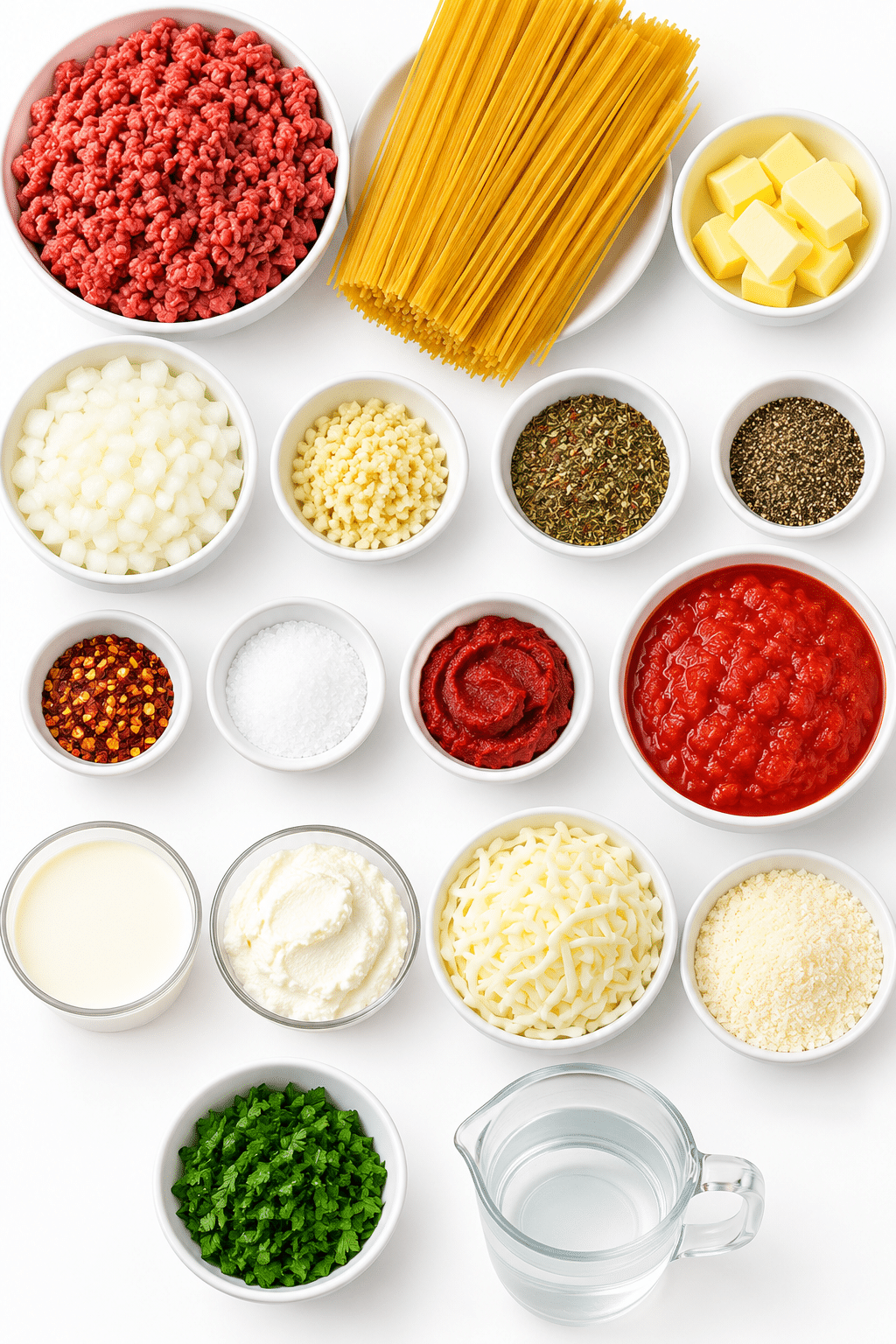
Ingredients
For the Beef and Tomato Sauce
- 1¼ pounds 90% lean ground beef
- 2 tablespoons unsalted butter
- 1 small yellow onion, finely diced
- 5 garlic cloves, minced
- 1½ teaspoons Italian seasoning
- ½ teaspoon black pepper
- ¼ teaspoon crushed red pepper flakes
- ½ teaspoon salt, or to taste
- 1 tablespoon tomato paste
- 1 can crushed tomatoes, 15 ounces
- ¾ cup heavy cream
- ¾ cup whole-milk ricotta
For the Pasta and Cheese
- 12 ounces dry spaghetti
- 1¼ cups freshly shredded mozzarella
- ½ cup freshly grated Parmesan
- ½ to 1 cup reserved pasta water, as needed
- 2 tablespoons chopped fresh parsley
How to Make Creamy Beef Spaghetti
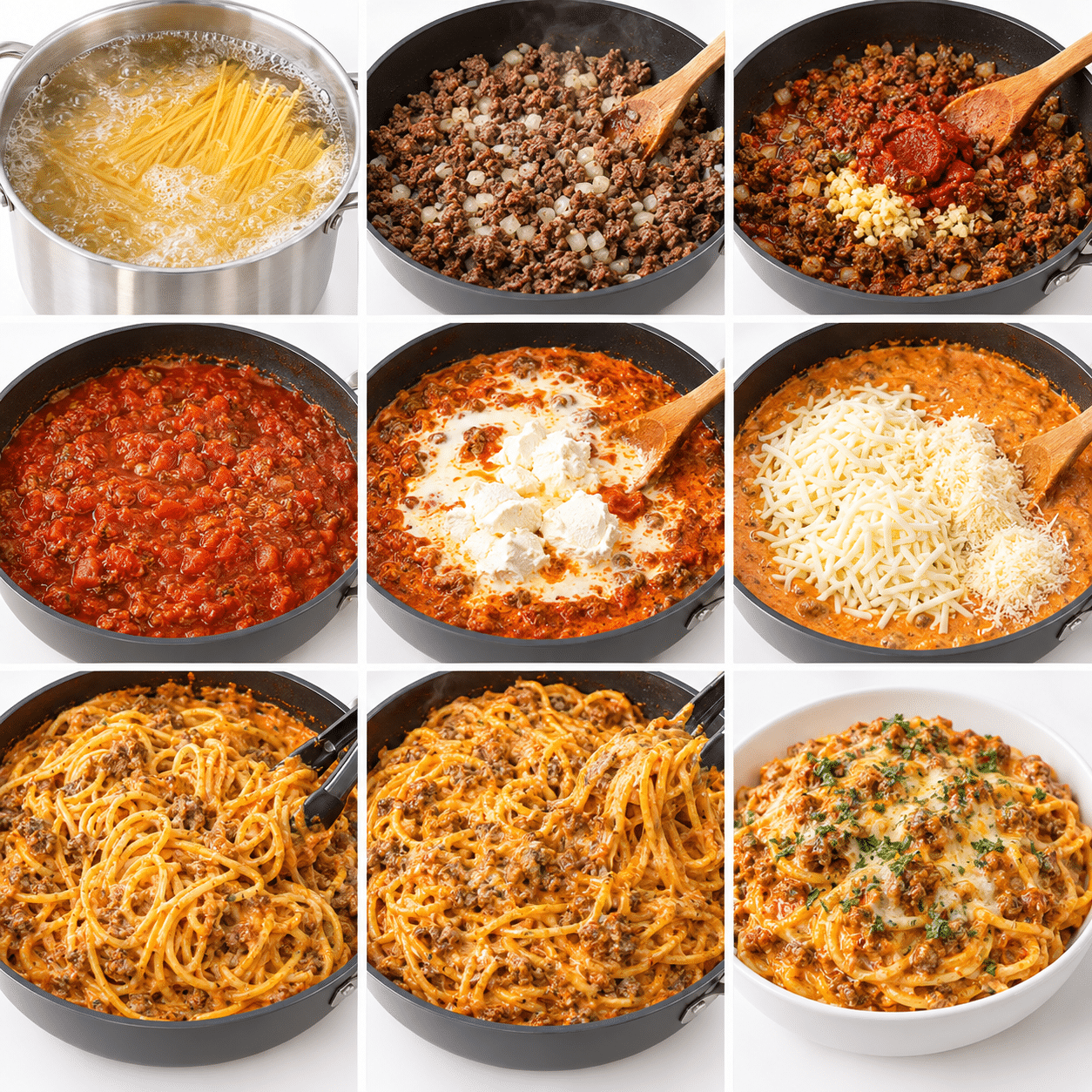
1. Cook the Spaghetti
Bring a large pot of generously salted water to a boil.
Add the spaghetti and cook according to the package directions until al dente. The pasta should be tender but still have a slight bite in the center.
Before draining, reserve about 1 cup of the pasta water. Drain the spaghetti and set it aside.
Do not skip the pasta water. You may not need all of it, but it gives you an easy way to adjust the sauce later.
2. Brown the Ground Beef and Onion
Place a large, deep skillet over medium-high heat and add the butter.
Once melted, add the ground beef and finely diced onion.
Cook for several minutes, breaking the beef apart with a wooden spoon or spatula. Continue cooking until the beef is deeply browned and the onion becomes soft and translucent.
Allowing the beef to develop browned edges is important. Those caramelized bits create much more flavor than simply cooking the meat until it is no longer pink.
3. Add the Garlic and Seasonings
Stir in the minced garlic, Italian seasoning, black pepper, crushed red pepper flakes, salt, and tomato paste.
Cook for about 1 minute, stirring constantly.
The tomato paste should become slightly darker and more concentrated, while the garlic and herbs should become fragrant.
Be careful not to cook the garlic too long because it can become bitter.
4. Build the Tomato Cream Sauce
Pour in the crushed tomatoes and stir well, scraping up any flavorful browned bits from the bottom of the skillet.
Bring the mixture to a gentle simmer and cook for about 5 minutes.
This short simmer allows the tomatoes to combine with the beef and seasonings while concentrating their flavor.
5. Add the Cream and Ricotta
Reduce the heat to low.
Slowly stir in the heavy cream and whole-milk ricotta.
Continue stirring until the ricotta is incorporated and the sauce becomes thick, creamy, and orange-red.
Avoid boiling the sauce aggressively once the dairy has been added. Gentle heat helps maintain a smooth texture.
6. Add the Cheese
Remove the skillet from the heat.
Add the freshly shredded mozzarella and grated Parmesan. Stir gently until the cheese melts into the warm sauce.
The residual heat from the sauce should be enough to create a rich, cheesy consistency.
If the sauce feels too thick, add a small splash of reserved pasta water and stir.
7. Toss Everything Together
Add the cooked spaghetti directly to the skillet.
Toss thoroughly so the creamy beef sauce coats every strand of pasta.
If necessary, add reserved pasta water a few tablespoons at a time until you reach the consistency you like.
The finished sauce should cling to the spaghetti without being dry or overly thick.
Fold in the chopped fresh parsley just before serving.
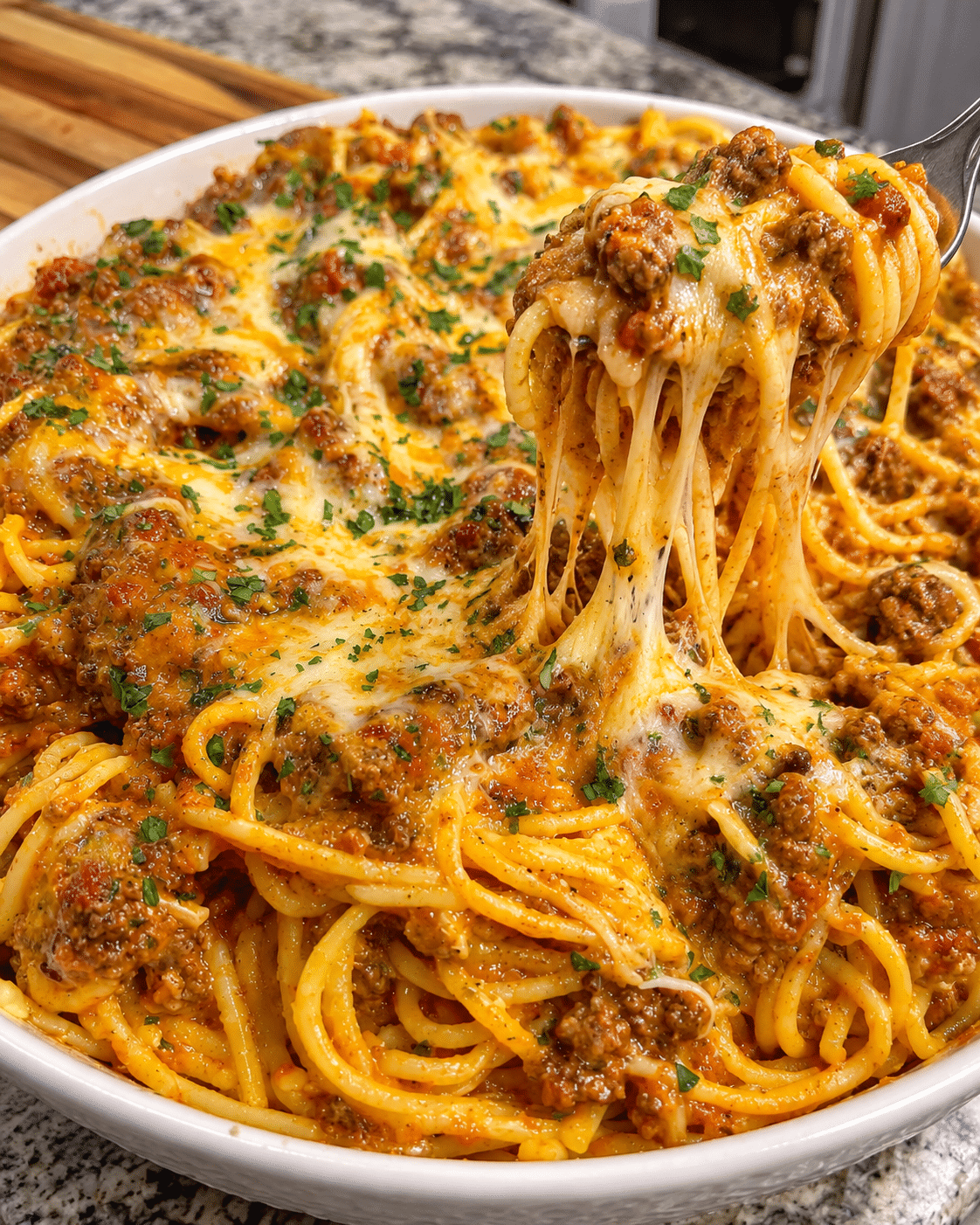
Tips for the Best Creamy Beef Spaghetti
Brown the Beef Properly
Don’t rush the browning process. Let the beef sit against the hot skillet long enough to develop golden-brown edges. This adds a deeper, more savory flavor to the finished sauce.
Use Freshly Shredded Cheese
Freshly shredded mozzarella and Parmesan melt more smoothly than many pre-shredded cheeses. They also give the sauce a better texture and fresher flavor.
Keep the Heat Low After Adding Dairy
Cream and ricotta don’t need aggressive boiling. Once they’re added, reduce the heat and stir gently.
Reserve More Pasta Water Than You Think You Need
Even if the sauce looks perfect at first, pasta can absorb a surprising amount of moisture as it sits. A splash of pasta water can bring the sauce back to a silky consistency.
Don’t Overcook the Spaghetti
Cooking the pasta just until al dente gives it enough structure to hold up to the rich sauce.
How to Make This Recipe Even Better
For an especially flavorful version, let the beef develop a little extra browning before adding the onion. Those browned pieces left on the bottom of the pan will dissolve into the tomato sauce and add another layer of flavor.
You can also finish each serving with a little extra Parmesan and freshly chopped parsley.
A large deep skillet is one of the most useful kitchen utensils for this recipe because it gives you enough room to brown the beef and toss the spaghetti directly in the sauce. If you’re building a practical home kitchen, a sturdy skillet, large pasta pot, wooden spoon, fine grater, and good chef’s knife are all particularly useful.
For busy cooks, the sauce can also be prepared while the spaghetti cooks, allowing the entire dinner to come together efficiently.
Easy Variations
Add Spinach
Stir in a few handfuls of fresh baby spinach after adding the tomato sauce. Let it wilt before adding the cream and ricotta.
Make It Spicier
Increase the crushed red pepper flakes for a stronger kick. You can also add a pinch of Cajun seasoning for a slightly different flavor profile.
Add More Vegetables
Finely diced bell peppers, mushrooms, or zucchini can be cooked with the onion and beef.
Try Another Pasta Shape
Although spaghetti works beautifully here, the sauce also pairs well with rotini, penne, rigatoni, or bowtie pasta. Short pasta shapes are particularly good at catching pieces of beef and creamy sauce.
Extra Cheesy Version
For an even richer dinner, add a little more mozzarella on top just before serving and allow the residual heat to melt it.
Serving Suggestions
This creamy beef spaghetti is filling enough to serve as a complete meal, but a few simple sides can make dinner feel even more special.
Serve it with:
- A crisp green salad
- Garlic bread
- Toasted French bread
- Roasted vegetables
- Steamed broccoli
- A simple tomato and cucumber salad
For a fresh contrast to the rich sauce, a salad dressed with lemon juice and olive oil works particularly well.
Storage and Reheating
Allow leftovers to cool before transferring them to an airtight container.
Store the cooked spaghetti in the refrigerator for up to 3–4 days.
Because the sauce contains cream and cheese, it may become thicker after refrigeration. When reheating, add a small splash of milk, cream, broth, or reserved pasta water to loosen the sauce.
Reheating on the Stovetop
Place the leftovers in a skillet over low to medium-low heat. Add a splash of liquid and stir gently until heated through.
Reheating in the Microwave
Place a serving in a microwave-safe bowl. Add a small splash of milk or water, cover loosely, and heat in short intervals, stirring between each one.
Avoid overheating because the cheese sauce can become oily or overly thick if exposed to high heat for too long.
Frequently Asked Questions
Can I use ground beef with a different fat percentage?
Yes. Ground beef with a higher fat percentage can also be used. If there is a significant amount of rendered fat after browning, carefully drain some before continuing with the recipe.
Can I make this recipe without ricotta?
Yes. Ricotta contributes creaminess and body, but you can omit it if necessary. The sauce will be slightly less thick and creamy, so adjust the consistency with pasta water as needed.
Can I use pre-shredded mozzarella?
You can, but freshly shredded mozzarella generally melts more smoothly. Pre-shredded cheese may contain anti-caking ingredients that can slightly affect the texture of a creamy sauce.
Why is my sauce too thick?
The pasta continues absorbing sauce after it is mixed in. Add reserved pasta water a little at a time and toss until the sauce becomes smooth and glossy again.
Can I make the sauce ahead of time?
Yes. The beef tomato sauce can be prepared ahead and refrigerated. Reheat it gently, then add the freshly cooked spaghetti and cheese before serving.
Can I freeze creamy beef spaghetti?
It can be frozen, although dairy-based sauces may change texture slightly after thawing. For the best result, cool the pasta completely, store it in an airtight freezer-safe container, and thaw it in the refrigerator before reheating gently.
What cheese can I use instead of mozzarella?
Provolone, Monterey Jack, or a mild Italian cheese can work well. Parmesan is still useful for adding a sharper, savory flavor.
Conclusion
Creamy Beef Spaghetti in Tomato Mozzarella Sauce brings together everything you want from a comforting pasta dinner: deeply browned beef, fragrant garlic and Italian seasoning, rich tomato flavor, creamy ricotta, and plenty of melted mozzarella and Parmesan. The sauce is hearty without being complicated, and the reserved pasta water makes it easy to achieve that smooth, clingy consistency that coats every strand of spaghetti.
It is a practical recipe for busy weeknights, but it also has the comforting, cheesy presentation that makes it perfect for a family dinner. Serve it hot with fresh parsley, extra Parmesan, and your favorite side of garlic bread for a satisfying homemade meal.

Ingredients
Method
- Cook the Spaghetti
- Bring a large pot of generously salted water to a boil.
- Add the spaghetti and cook according to the package directions until al dente. The pasta should be tender but still have a slight bite in the center.
- Before draining, reserve about 1 cup of the pasta water. Drain the spaghetti and set it aside.
- Do not skip the pasta water. You may not need all of it, but it gives you an easy way to adjust the sauce later.
- Brown the Ground Beef and Onion
- Place a large, deep skillet over medium-high heat and add the butter.
- Once melted, add the ground beef and finely diced onion.
- Cook for several minutes, breaking the beef apart with a wooden spoon or spatula. Continue cooking until the beef is deeply browned and the onion becomes soft and translucent.
- Allowing the beef to develop browned edges is important. Those caramelized bits create much more flavor than simply cooking the meat until it is no longer pink.
- Add the Garlic and Seasonings
- Stir in the minced garlic, Italian seasoning, black pepper, crushed red pepper flakes, salt, and tomato paste.
- Cook for about 1 minute, stirring constantly.
- The tomato paste should become slightly darker and more concentrated, while the garlic and herbs should become fragrant.
- Be careful not to cook the garlic too long because it can become bitter.
- Build the Tomato Cream Sauce
- Pour in the crushed tomatoes and stir well, scraping up any flavorful browned bits from the bottom of the skillet.
- Bring the mixture to a gentle simmer and cook for about 5 minutes.
- This short simmer allows the tomatoes to combine with the beef and seasonings while concentrating their flavor.
- Add the Cream and Ricotta
- Reduce the heat to low.
- Slowly stir in the heavy cream and whole-milk ricotta.
- Continue stirring until the ricotta is incorporated and the sauce becomes thick, creamy, and orange-red.
- Avoid boiling the sauce aggressively once the dairy has been added. Gentle heat helps maintain a smooth texture.
- Add the Cheese
- Remove the skillet from the heat.
- Add the freshly shredded mozzarella and grated Parmesan. Stir gently until the cheese melts into the warm sauce.
- The residual heat from the sauce should be enough to create a rich, cheesy consistency.
- If the sauce feels too thick, add a small splash of reserved pasta water and stir.
- Toss Everything Together
- Add the cooked spaghetti directly to the skillet.
- Toss thoroughly so the creamy beef sauce coats every strand of pasta.
- If necessary, add reserved pasta water a few tablespoons at a time until you reach the consistency you like.
- The finished sauce should cling to the spaghetti without being dry or overly thick.
- Fold in the chopped fresh parsley just before serving.